


A Message from Dr. David Nelson
Goals don’t work without daily habits. And daily habits don’t stick without accountability.
As parents, we know this from our own lives. We set goals at work, manage budgets, keep the house running, and try to find time for ourselves. When we let things slide, real-world accountability follows pretty quickly—whether that’s a missed deadline, a late fee, or the chaos of a backed-up laundry room. Life requires us to balance a dozen competing demands, and we only stay on track because we hold ourselves accountable to the outcomes.
Our middle schoolers are entering a critical stage where they have to learn this same balance. Between making the Honor Roll or Principal's Honor Roll, pushing for Jr. Beta Club, keeping up with homework, and helping out at home, their responsibilities are stacking up. As parents, our job isn't just to help them set big goals. It's to teach them that choices carry consequences—and that accountability is how we keep CLIMBing.
Setting a goal is only half the process.
It’s easy for a student to say they want better grades or want to improve their behavior on the field and in class. But a goal without accountability is just a wish. If we expect them to complete their chores—whether that’s cleaning up the kitchen after dinner, helping with laundry, or taking care of yard work—we also have to build a system that ensures those tasks actually get done.
Small, measurable steps make the goal achievable.
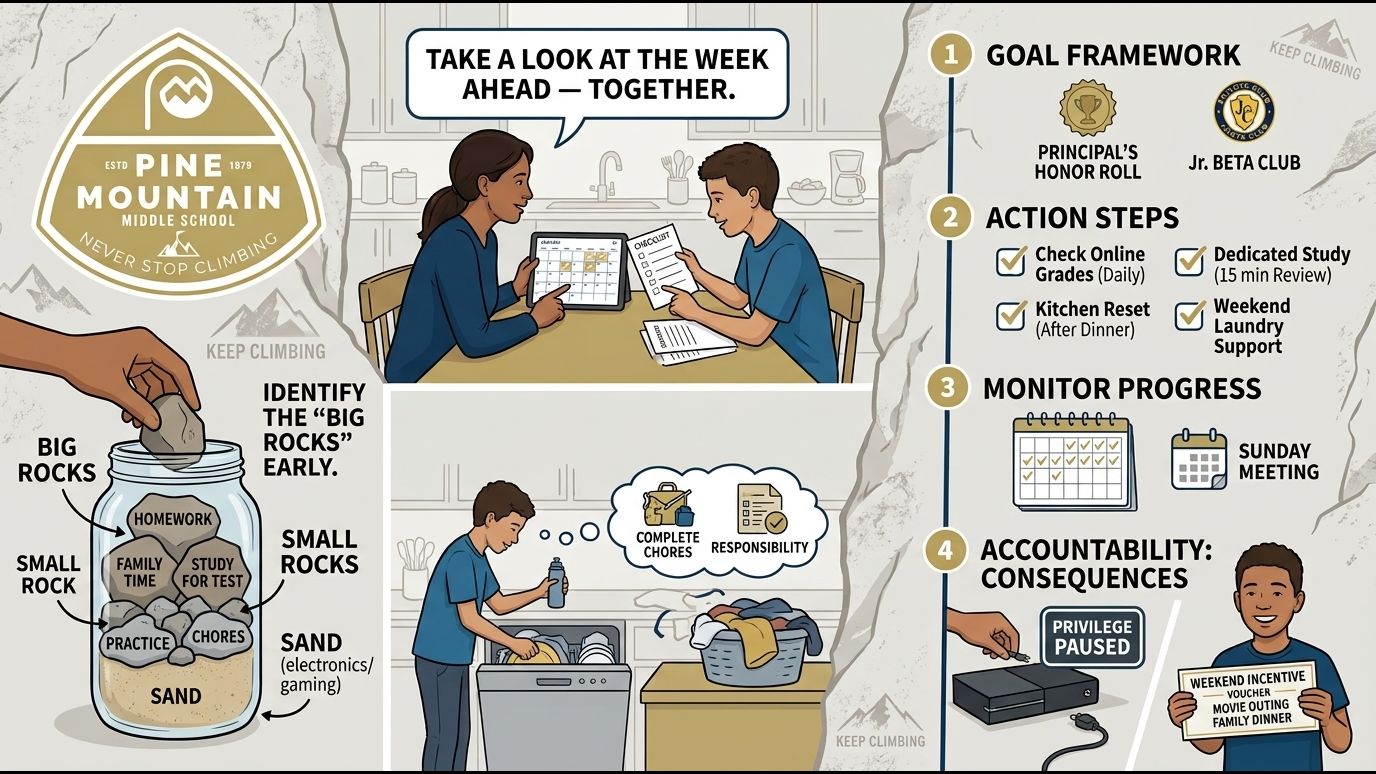
When you sit down with your student, break the big goal down into small daily habits with clear metrics:
The Goal: Earn a spot on the Honor Roll and complete all home responsibilities consistently over the next 9 weeks.
The Action Steps: Spend 10 minutes checking the online grade portal every day at 4:30 PM, complete homework before opening video games or social media, and wipe down the kitchen counters immediately after dinner.
The Timeframe: 9 weeks, with a quick 5-minute progress check every Sunday evening.
The Incentive: Earning weekend privileges, like having friends over, getting extra screen time, or having a special outing after meeting weekly targets.
Accountability means holding the line when things fall short.
What happens if the homework isn't finished or the chores don't get done? That is where real learning happens. Accountability isn't about anger; it's about cause and effect. If the kitchen isn't cleaned or a study session gets skipped, the privilege associated with it—like cell phone access, gaming time, or weekend plans—is paused until the responsibility is met.
When students realize that their choices directly control their privileges, accountability stops feeling like a punishment and starts working like a compass.
We are building habits for adulthood.
Teaching accountability takes patience, follow-through, and repetition. But when we hold our students accountable for their homework, their behavior, and their household responsibilities today, we aren't just helping them make the Honor Roll this term. We are teaching them how to balance competing priorities, take ownership of their actions, and grow into reliable, successful adults.